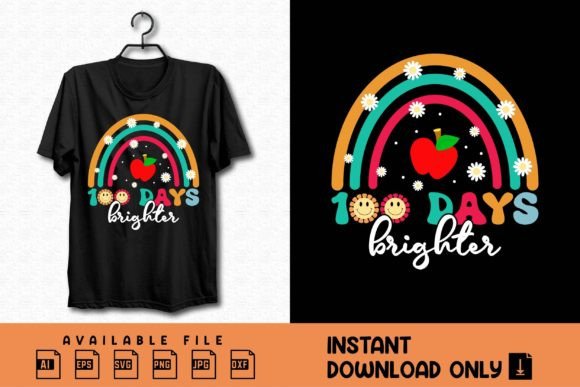
Happy 100 Days Back to School T-Shirt: A Versatile Design for Creative and Practical Use
The Happy 100 Days Back to School T-shirt is more than just a piece of apparel—it’s a creative asset that can be adapted across multiple platforms and workflows. Designed with flexibility in mind, this typography-based t-shirt graphic allows users to customize colors, sizes, and formats easily, making it ideal for both personal and professional applications. Whether you're a designer, educator, or entrepreneur, this digital clip art file offers a practical solution for integrating back-to-school themes into your projects.
Understanding the Happy 100 Days Back to School T-Shirt Design
The Happy 100 Days Back to School T-shirt design features vector-based graphics composed of 100 individual shapes. This structure ensures that the design remains crisp and clear at any size, whether you're printing it on a small vinyl decal or scaling it up for a billboard. The versatility of this design makes it suitable for a wide range of uses, from clothing to promotional materials.
One of the most significant advantages of this design is its color-changing capability. With over 100 color options available, users can easily adjust the palette to match their brand identity, seasonal themes, or personal style. This feature is particularly useful for businesses looking to create cohesive marketing materials or individuals who want to express their personality through customized apparel.
Integrating the Design Into Your Workflow
Incorporating the Happy 100 Days Back to School T-shirt into your workflow can streamline several processes, especially when dealing with print-on-demand services, custom merchandise creation, or event planning. Here's how you can use it effectively:
- Before a project: Use the design as a visual inspiration or mood board element to set the tone for a new product line or campaign.
- During implementation: Apply the graphic directly to your chosen medium—whether it's a t-shirt, sticker, or card—using compatible software like Adobe Illustrator or CorelDRAW.
- After completion: Repurpose the design for social media posts, packaging, or as part of a larger branding strategy.
Given that the file comes in multiple formats—including EPS, AI, JPG, and PNG—you can seamlessly integrate it into various design tools and workflows. The EPS format, in particular, is ideal for high-resolution printing and editing in vector-based software.
Use Cases for the Happy 100 Days Back to School T-Shirt Graphic
The Happy 100 Days Back to School T-shirt graphic isn't limited to just apparel. Its adaptability opens up a range of creative possibilities:
- Scrapbooking: Add a nostalgic or celebratory touch to your scrapbook pages by incorporating this graphic into layouts.
- Cut machines: Use the design with Cricut or Silhouette machines to create custom stickers, iron-on transfers, or decorative elements.
- Vinyl decals and stickers: Print the graphic on vinyl and apply it to laptops, water bottles, or windows for a personalized look.
- Clothes printing: Whether you're running a print-on-demand business or creating custom merchandise, this design offers a ready-to-print solution.
- Printable decorations: Create posters, banners, or wall art using the graphic for events, classrooms, or home décor.
- Cards and invitations: Use the design as a background or embellishment for birthday cards, party invites, or school-related communications.
- Iron-on transfer: Apply the graphic to fabric using heat-transfer methods for DIY apparel or custom gifts.
- Engraving: Use the design as a template for engraving on wood, metal, or other surfaces for unique keepsakes or promotional items.
This level of adaptability ensures that the Happy 100 Days Back to School T-shirt design can be used in nearly any context where visual creativity meets practical application.
Practical Implementation Tips
To get the most out of the Happy 100 Days Back to School T-shirt graphic, consider these tips for efficient use:
- Organize your files: Store the source files (EPS, AI) separately from exported versions (JPG, PNG) to maintain clarity and scalability.
- Test prints before mass production: Always do a test print or mock-up to ensure the colors and placement are accurate before proceeding with bulk orders.
- Optimize for different mediums: Adjust the graphic based on the material you're printing on—light-colored fabrics may require darker hues for visibility.
- Stay consistent with branding: If using the design for commercial purposes, ensure that all variations align with your brand guidelines and color schemes.
- Backup your files: Keep multiple backups of your source files to avoid data loss, especially if working on long-term projects.
By following these steps, you can ensure that your use of the Happy 100 Days Back to School T-shirt graphic is both efficient and effective, regardless of the platform or medium you're working with.
Long-Term Use and Quality Control
For those who plan to use the Happy 100 Days Back to School T-shirt design repeatedly, maintaining quality control is essential. Since the design is vector-based, it will remain sharp and scalable over time, reducing the need for frequent updates or redesigns. However, it's still important to periodically review the file for any potential issues, such as outdated fonts or compatibility problems with newer software versions.
If you're using this graphic for ongoing projects, consider creating a library of pre-edited versions with different color schemes or layout adjustments. This can save time and ensure consistency across all outputs.
Additionally, keeping track of how the design performs in real-world applications—such as how well it prints on different fabrics or how it looks under various lighting conditions—can help you refine your approach for future projects.
The Happy 100 Days Back to School T-shirt is a valuable tool for anyone involved in design, marketing, or creative expression. By understanding its capabilities and limitations, you can integrate it smoothly into your workflow and maximize its utility across multiple platforms and use cases.